5J3mBbAH58CER6d...
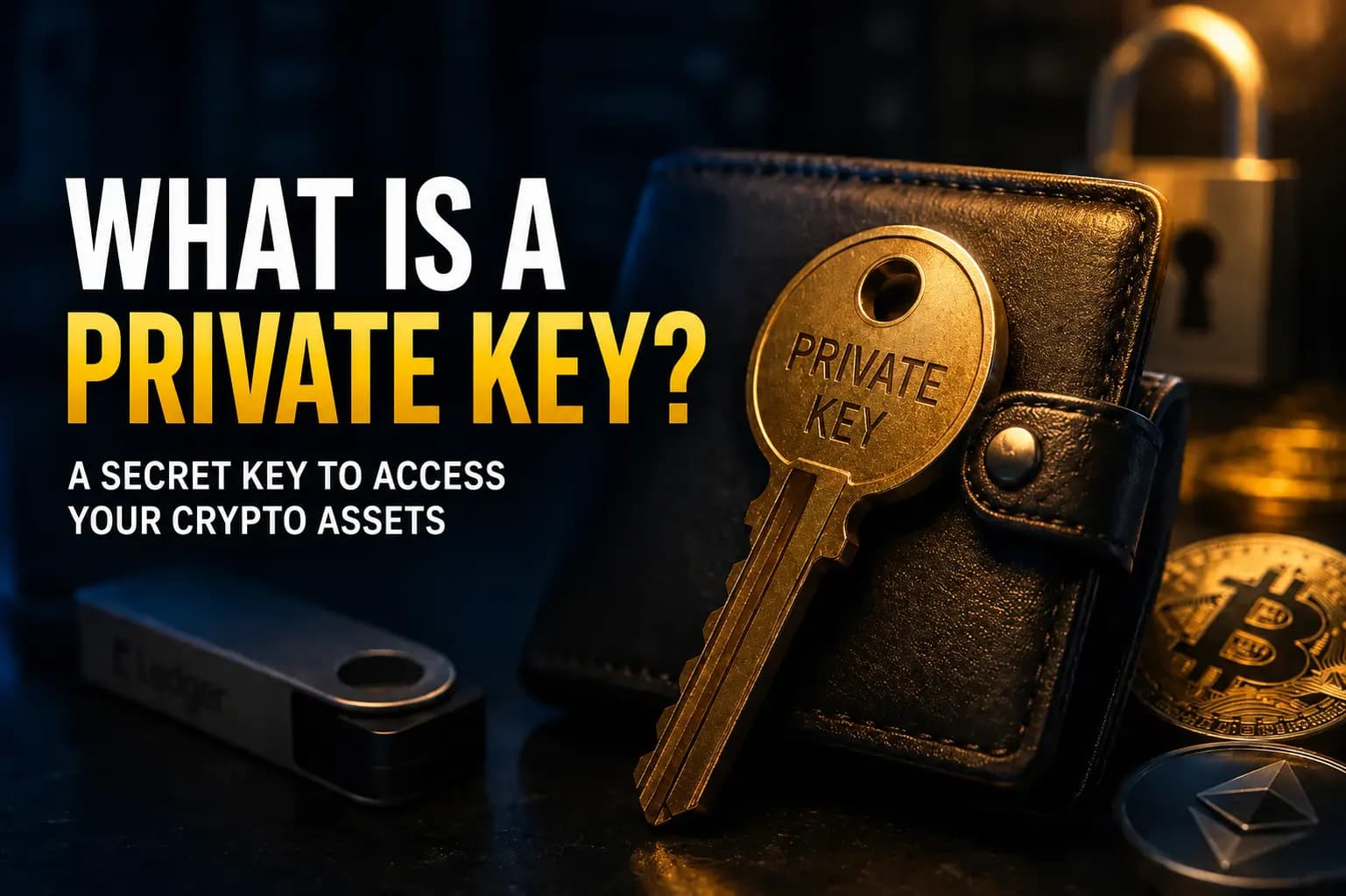
However, most modern wallets today no longer directly display raw private keys to users. Instead, wallets provide:
- Seed phrase (12–24 words)
- Recovery phrase
- Secret phrase
The seed phrase is actually used to mathematically generate the private key.
Private keys are used to:
- Access wallets
- Send crypto
- Sign blockchain transactions
- Prove ownership of digital assets
Without a private key, you do not truly own the crypto assets.
That is why a popular term appears in the crypto community:
“Not your keys, not your coins.”
Meaning, if you do not hold your own private key, then the assets are actually still controlled by another party.
To understand the technology behind this system, you can also read the articles:
- What is Blockchain
- What is Smart Contract
Difference Between Private Key and Public Key
Many beginners are still confused about the difference between private keys and public keys. In fact, both have very different functions.
Private Key
Private keys are:
- Secret
- Must not be shared
- Used to access and control assets
It is like an ATM PIN + digital signature + master password in one access.
Public Key
A public key is a pair of private keys that can be shared with others.
Its functions:
- Receiving crypto
- Becoming a wallet address
- Public identity on the blockchain
Public keys are safe to share because they cannot be directly used to steal assets.
Simple Analogy
Imagine:
- Public key = bank account number
- Private key = PIN + official account signature
Other people may know your bank account number, but they must not know your ATM PIN
How Private Keys Work on Blockchain
To understand how private keys work, let’s look at the simple process when someone sends crypto.
1. Wallet Creates a Key Pair
When creating a crypto wallet, the system automatically generates:
- Private key
- Public key
Both are mathematically connected using cryptography.
2. User Receives Crypto
Other people can send assets to your wallet address through the public key.
For example:
- Bitcoin
- Ethereum
- Stablecoin
- Web3 token
3. User Sends Transaction
When you want to send crypto, the wallet uses the private key to:
- Create a digital signature
- Prove that you are the legitimate owner of the asset
4. Blockchain Verifies
The blockchain network verifies the digital signature without needing to know the original private key.
This is what makes blockchain:
- Secure
- Transparent
- Difficult to hack
This concept is an important part of modern cryptographic technology.
Why Private Keys Are Very Important for Crypto Security
Private keys are the core of security in the crypto world.
Without a private key:
- You cannot access the wallet
- Can’t send assets
- Can’t recover the account
On the other hand, if a private key falls into someone else’s hands:
- They can drain the entire wallet
- Transactions cannot be canceled
- There is no blockchain customer service
This is why crypto security differs from traditional financial systems.
Blockchain is designed as a decentralized system, so security responsibility lies in the hands of the users themselves.
Therefore, before starting crypto investment, it is important to understand:
- How to Safely Invest in Crypto for Beginners
- Crypto Security Tips
Risks If a Private Key Leaks of Lost
1. Crypto Assets Can Be Permanently Stolen
If someone knows your private key, they can:
- Log into the wallet
- Transfer all assets
- Drain balances within minutes
And because blockchain transactions are irreversible, assets usually cannot be recovered.
2. Can’t Recover the Account
Unlike email or social media, crypto wallets do not have features such as:
- “Forgot password”
- Account reset
- Central customer support
If the private key is lost and you do not have a backup, wallet access can be lost forever.

3. Phishing and Scam Risks
Many scammers use:
- Fake wallet websites
- Fake wallet applications
- Phishing links
- Fake customer support
Their goal is to steal:
- Private key
- Seed phrase
- Recovery phrase
4. Malware and Hacker Threats
Computers or phones infected with malware can:
- Record keyboards
- Take screenshots
- Steal clipboard data
- Automatically copy seed phrases
Therefore device security is also very important.
How to Store Private Keys Safely
1. Never Share Your Private Key
The most important rule:
Never give your private key or seed phrase to anyone.
Including:
- Fake admins
- Fake customer support
- Crypto influencers
- Friends
- Telegram groups
No official party will ever ask for your private key.
2. Use a Hardware Wallet
A hardware wallet is a physical device specifically designed to store private keys offline.
Advantages:
- Safer from hackers
- Difficult to be infected by malware
- Suitable for long-term storage
3. Store Seed Phrases Offline
The best method:
- Write them on paper
- Store them in a safe place
- Use waterproof/fireproof backups if necessary
Avoid storing seed phrases in:
- Phone screenshots
- Google Drive
- WhatsApp chats
- Online notes
4. Enable Additional Security
Use:
- Strong passwords
- Wallet PINs
- Biometric locks
- Two-factor authentication (2FA)
5. Use Trusted Wallets
Learn first before choosing a wallet.
Also read:
- Best Crypto Wallets This Year
- How to Use a Crypto Wallet for Beginners
Storing Seed Phrase in Screenshot
This is very dangerous because:
- Cloud storage can be hacked
- Phones can be lost
- Malware can read galleries
Giving Seed Phrases to fake Website
Many beginners are deceived by websites asking for:
- Recovery phrase
- Private key
- Wallet synchronization
In fact, it is a scam.
Not Create Back Up
Some users only store seed phrases in one place.
If:
- The paper is damaged
- The house catches fire
- The phone is lost
Then wallet access is also lost.
Use Random Wallets
Do not download wallets from unofficial sources.
Make sure:
- Download from the official website
- Good reviews
- Widely used by the community
Difference Between Custodial Wallet vs Non-Custodial Wallet
Custodial Wallet
In custodial wallets:
- Private keys are stored by third parties
Example: crypto exchanges
Advantages:
- Easy to use
- Can reset accounts
- Suitable for beginners
Disadvantages:
- You do not fully hold the private key
- Risk if the platform has issues
Non-Custodial Wallet
In non-custodial wallets:
- You hold your own private key
- Full control over assets
Advantages:
- More decentralized
- Full ownership
- Better privacy
Disadvantages:
- Security responsibility is entirely on the user
Which is Better?
For beginners:
- Custodial wallets are suitable for initial learning
For more serious users:
- Non-custodial wallets are safer for the long term
The most important thing is understanding the risks.
Additional Security Tips for Crypto
Use a Separate Device for Crypto
If possible:
- Separate your crypto phone from your daily phone
- Avoid installing random applications
Beware of Phishing Links
Always check:
- Website domains
- URL spelling
- HTTPS
- Official applications
Do Not Flex Crypto Assets
Showing off asset amounts can increase risks of:
- Social engineering
- Fraud
- Hacker targeting
Update Security Knowledge
The crypto world evolves quickly.
Follow developments about:
- Latest scams
- New phishing techniques
- Wallet security updates
Start with Small Amounts
Before storing large assets:
- Learn how wallets work
- Understand backups
- Test small transactions first
Private Key and the Future of Web3
In the Web3 ecosystem, private keys become the main identity of users.
Private keys are used to:
- Access wallets
- Log into decentralized applications
- Use smart contracts
- Interact with Web3 tokens
Including when using utility tokens in modern blockchain ecosystems such as DRX Token.
Therefore, understanding private key security is not only important for investment, but also for participating in the future of decentralized technology.
Also read:
- What is DRX Token
- What is Smart Contract
Conclusion
Private keys are the main foundation of security in the crypto world.
Without understanding private keys, users are at risk of:
- Losing assets
- Became victim to scams
- Being unable to recover wallets
On the other hand, by understanding how private keys work and how to store them:
- You can keep assets safer
- Reduce theft risks
- Be more prepared to enter the Web3 world
Crypto provides financial freedom and full control over digital assets, but that freedom also comes with great security responsibility.
Before starting crypto investments or using Web3-based tokens such as DRX Token, make sure you understand the basics of wallet security and how to properly protect private keys.
FAQ
Is a private key the same as a password?
No. A private key is the main cryptographic access to a blockchain wallet, while a password usually only protects the wallet application on your device.
Can private keys be shared?
No. Anyone who has the private key can take all crypto assets in that wallet.
What happens if a private key is lost?
If you do not have a backup seed phrase or recovery phrase, wallet access can be permanently lost.
Do exchanges store users’ private keys?
In custodial wallets, exchanges usually store users’ private keys.
Which is safer: custodial or non-custodial wallets?
Non-custodial wallets give full control to users, but security responsibility is also entirely in the hands of users.
Is a seed phrase the same as a private key?
Not exactly the same. A seed phrase is used to mathematically generate and recover private keys.
How do I learn to use crypto wallets safely?
Start by understanding:
- Beginners Must Know How to Use a Crypto Wallet
- Tips About Crypto Security
- How to Safely Invest in Crypto for Beginners
Before storing large amounts of assets.