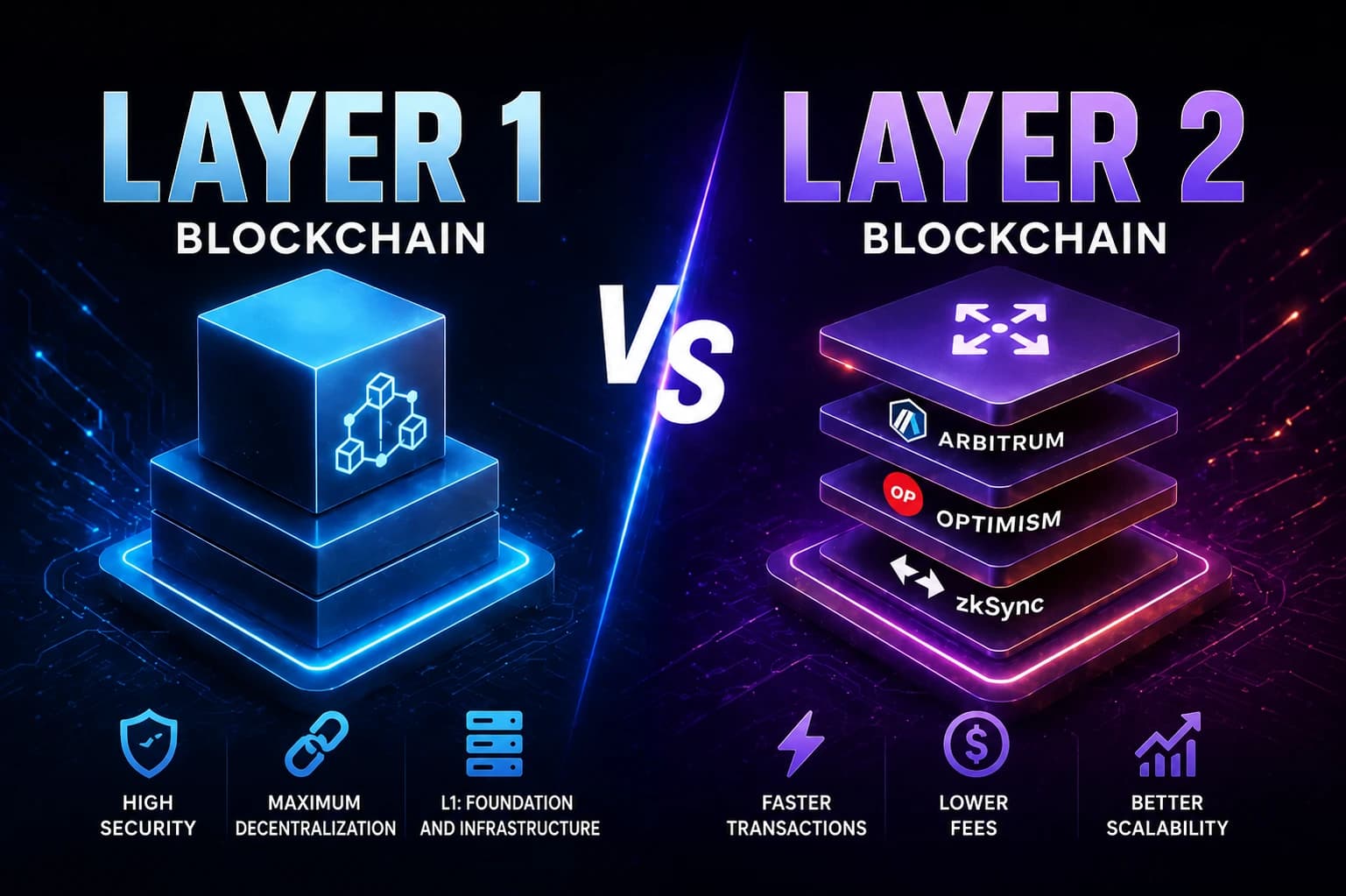
Example: Arbitrum, Optimism, Polygon, Lightning Network
What Is Layer 1 Blockchain?
Layer 1 is the main foundation of a blockchain ecosystem.
All the core activities such as:
- Transaction validation
- Network consensus
- Data security
- Smart contracts
Run here.
Main Function Layer 1
1. Becoming the Main Source of Truth
Layer 1 records original and final data.
2. Maintain Network Security
Through mechanisms such as:
- Proof of Work (Bitcoin)
- Proof of Stake (Ethereum, Solana)
3. Supporting the Ecosystem
DApp, token, NFT, DeFi are usually built on top of Layer 1.
Example of Popular Layer 1
Bitcoin
- Focus: Store of Value
- Advantage: Very secure
- Disadvantage: Slow, fees can be high
Ethereum
- Focus: Smart contracts & Web3
- Advantage: Largest ecosystem
- Disadvantage: Expensive gas fees during congestion
Solana
- Focus: High speed
- Advantage: Fast & cheap
- Disadvantage: Sometimes faces stability issues
Advantages of Layer 1
High Security
Because all transactions are verified directly by the main network.
Stronger Decentralization
Large networks usually have more validators.
Foundation of Web3
Most innovations start from Layer 1.
Disadvantages Layer 1
Limited Scalability
The busier the network, the slower it becomes.
High Cost
Especially on Ethereum during network congestion.
Difficult Upgrades
Major changes require community consensus.
What Is Layer 2 Blockchain?
Layer 2 is a solution to overcome Layer 1 limitations.
Instead of all transactions being processed on the main network, some activities are carried out “off-chain” and only the final result is recorded on Layer 1.
How Layer 2 Works Practically
Imagine you buy coffee 10 times a day.
Instead of recording every transaction one by one on the main blockchain, Layer 2 groups the transactions and sends the final result.
The result:
- Faster
- Cheaper
- Still benefits from Layer 1 security
Popular Types of Layer 2
Rollups
- Optimistic Rollups (Arbitrum, Optimism)
- ZK Rollups (zkSync, Starknet)
Sidechains
- Polygon PoS
State Channels
- Lightning Network (Bitcoin)
Advantages of Layer 2
Cheaper Gas Fees
Suitable for daily transactions.
High Speed
TPS (transactions per second) increases drastically.
Supports Mass Adoption
Games, NFTs, sport apps, and microtransactions become more realistic.
Disadvantages of Layer 2
Higher Complexity
Beginners are sometimes confused about bridging assets
Additional infrastructure Risks
Bridges or smart contracts can become points of risk.
Ecosystem Fragmentation
Liquidity can be spread out.
Main Differences Between Layer 1 vs Layer 2
| Aspect | Layer 1 | Layer 2 |
| Function | Main Blockchain | Scalability solution |
| Security | High | Depends on Layer 1 + design |
| Cost | Tends to be expensive | Cheaper |
| Speed | Slower | Faster |
| Scalability | Limited | High |
| Complexity | Simpler | More complex |
Case Study: Ethereum + Layer 2
Ethereum is the clearest example of why Layer 2 is needed.
Ethereum Problem:
- High gas fees
- Slow transactions during congestion
- Expensive DApps for new users
Solution:
Arbitrum / Optimism
- Reduce costs
- Speed up transactions
- Remain connected to Ethereum
Polygon
- Offers very low fees
- Widely used for gaming and brand adoption
The result: Ethereum remains the security center, while Layer 2 becomes the scalability engine.
Which One Is More Suitable for the Future of Web3?
The answer is not “Layer 1 or Layer 2.”
The answer is: Both.
Layer 1 best for:
- High security
- Final settlement
- Basic infrastructure
Layer 2 best for:
- Aplikasi mass adoption
- GameFi
- SocialFi
- Sport Web3
- NFT marketplace
The future of Web3 will most likely be a combination of:
Layer 1 = Security Layer
Layer 2 = User Experience Layer
Common Mistakes When Understanding Layer 1 and Layer 2
1. Assuming Layer 2 Replace Layer 1
In fact, Layer 2 actually strengthens Layer 1.
2. Thinking All Fast Blockchains = Better
Speed without security can be risky
3. Not Understanding bridge Cost
Moving assets between layers also has costs.
4. Focusing on Hype Instead of Utility
The best technology is the one relevant to real needs.
Relevance for DRX Token & Sport Web3
In developing sport Web3 ecosystems, choosing blockchain infrastructure is very important.
Platforms like DRX Token require:
Efficiency
So transactions for tickets, merchandise, rewards, or sport NFTs remain affordable.
Scalability
So large communities can still operate comfortably.
Real Utility
Not just speculative tokens.
This is where understanding Layer 1 vs Layer 2 becomes strategic.
Scalable and efficient ecosystems are more prepared to support digital sports adoption.
- What is blockchain?
- Layer 1 blockchain is
- What is Layer 2 blockchain
- Why interoperability is important
Conclusion
Layer 1 and Layer 2 are not competitors, but partners.
In short:
- Layer 1 = security & foundation
- Layer 2 = speed & efficiency
If you want to understand the future of blockchain, crypto, and Web3, you need to see how both work together.
For investors, builders, or beginner users, the best question is not “Which one is better?”
But:
“Which ecosystem is the most efficient, scalable, and has real utility?”
Because in the end, the blockchain technology that wins is the one that is actually used.
FAQ
What is the simple difference between Layer 1 and Layer 2?
Layer 1 is the main blockchain, while Layer 2 is an additional solution to improve performance.
Is Layer 2 more secure?
Security depends on the design, but many Layer 2 solutions still utilize Layer 1 security.
Does Bitcoin have Layer 2?
Yes, for example Lightning Network.
Why does Ethereum need Layer 2?
Because Ethereum often experiences high fees and scalability limitations.
Is the future of Web3 is on Layer 2?
Most likely Web3 will develop through a combination of Layer 1 + Layer 2.
Understanding the Technology, Choose the Right Ecosystem
Understanding Layer 1 vs Layer 2 helps you become smarter in choosing blockchain projects, not just following trends.
In the era of sport Web3, efficiency, scalability, and real utility are key — and this is why ecosystems like DRX Token are relevant for bridging blockchain technology with the needs of the modern sports industry.