- Membantu trader mengenali arah tren (naik, turun, atau mendatar).
- Mengurangi kebisingan (noise) dari fluktuasi harga jangka pendek.
- Memberikan sinyal potensi pembalikan atau kelanjutan tren.
Bayangkan MA seperti melihat peta jalan dari ketinggian, Anda tidak lagi terjebak melihat satu belokan kecil, tapi bisa menilai ke mana arah jalan besar itu mengarah.
Jenis-Jenis Moving Average yang Umum Digunakan
Simple Moving Average (SMA)
SMA adalah jenis Moving Average paling sederhana.
Rumusnya menghitung rata-rata harga penutupan selama periode tertentu — misalnya SMA 50 berarti rata-rata harga 50 hari terakhir.
Contoh:
Jika harga penutupan Bitcoin selama 5 hari terakhir adalah 40.000, 41.000, 42.000, 43.000, dan 44.000, maka:
SMA = (40.000 + 41.000 + 42.000 + 43.000 + 44.000) / 5 = 42.000
Kelebihan: mudah dipahami dan stabil.
Kekurangan: responnya lambat terhadap perubahan harga terbaru.
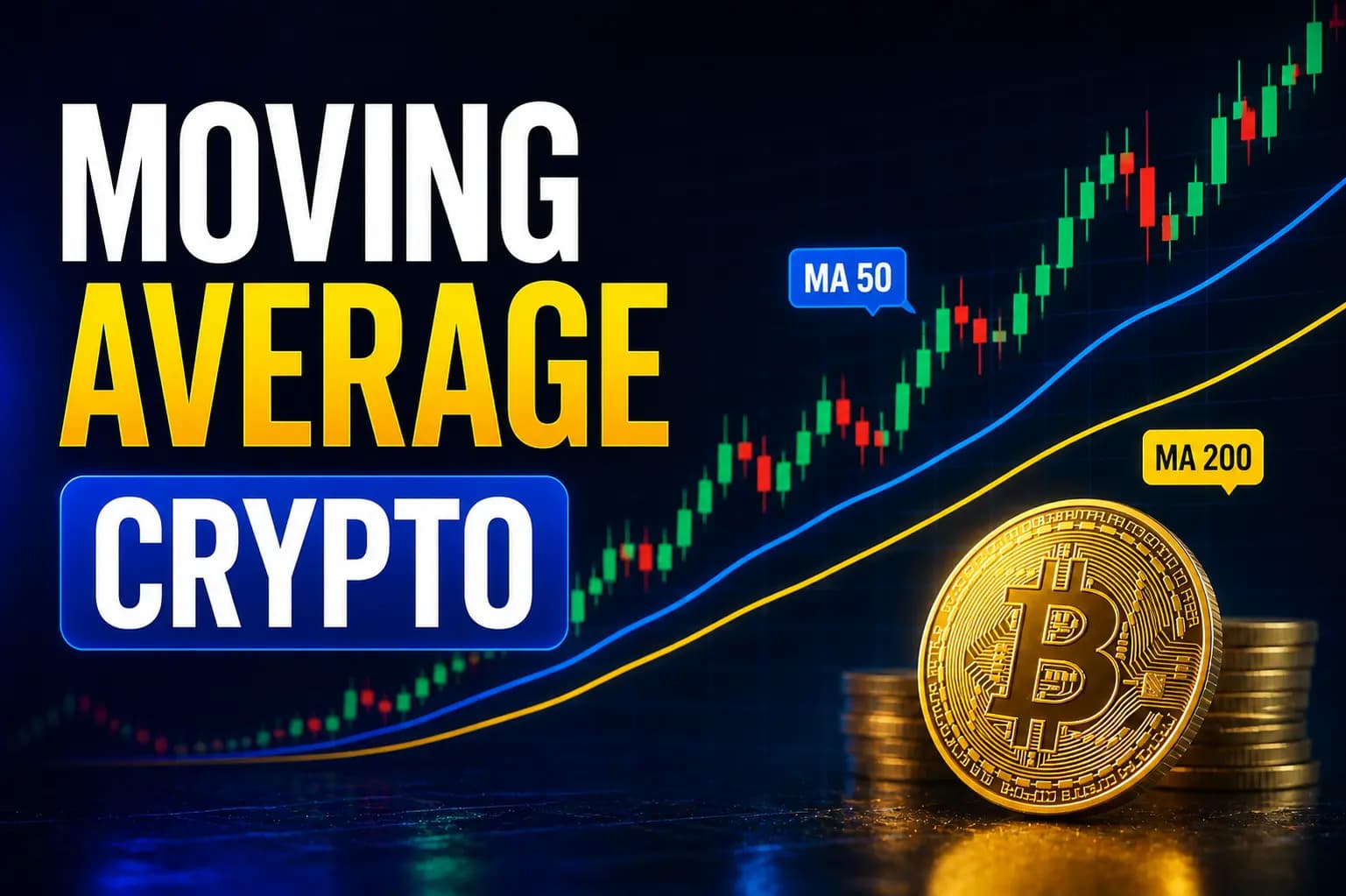
Trader jangka panjang biasanya menggunakan SMA 50 dan SMA 200 untuk membaca sinyal besar:
- Golden Cross (SMA 50 melintasi SMA 200 dari bawah ke atas) → sinyal bullish.
- Death Cross (SMA 50 menembus SMA 200 dari atas ke bawah) → sinyal bearish.
Exponential Moving Average (EMA)
EMA memberi bobot lebih besar pada harga terbaru. Artinya, ia lebih cepat merespons perubahan tren.
Inilah alasan EMA sering digunakan oleh day trader dan scalper, karena mereka butuh sinyal cepat.
Contoh: EMA 9 dan EMA 21 adalah kombinasi populer untuk mendeteksi momentum harga.
Ketika EMA 9 melintasi EMA 21 dari bawah ke atas → sinyal beli.
Sebaliknya, ketika EMA 9 turun di bawah EMA 21 → sinyal jual.
Kelebihan: responsif terhadap pergerakan harga baru.
Kekurangan: bisa menimbulkan sinyal palsu di pasar sideways.
Weighted Moving Average (WMA) dan Varian Lain
Selain SMA dan EMA, ada juga WMA (Weighted Moving Average) yang menempatkan bobot berbeda pada setiap harga, dengan fokus pada data terbaru.
Ada juga varian seperti Hull Moving Average (HMA) dan Smoothed Moving Average (SMMA) yang menggabungkan pendekatan untuk hasil lebih halus.
Namun, untuk 90% trader crypto, EMA dan SMA sudah lebih dari cukup. Terlalu banyak indikator sering membuat chart justru membingungkan.
Cara Membaca dan Menggunakan Moving Average dalam Trading Crypto
Interpretasi dasar Moving Average adalah melihat posisi harga terhadap garis MA.
- Jika harga di atas MA, tren cenderung naik (bullish).
- Jika harga di bawah MA, tren cenderung turun (bearish).
- Jika harga bergerak mendatar di sekitar MA, pasar cenderung sideways.
Namun, rahasia sebenarnya terletak pada interaksi antar-MA.
Misalnya, kombinasi EMA 9 & EMA 21 atau SMA 50 & SMA 200 bisa memberi sinyal tren jangka pendek dan panjang secara bersamaan. Contoh:
Ketika EMA 9 menembus EMA 21 ke atas pada chart Bitcoin 1 jam, trader bisa bersiap membuka posisi beli. Tapi jika pada chart harian SMA 50 masih di bawah SMA 200 (death cross), sinyal jangka panjang masih bearish, berarti risiko tetap tinggi.
Tips profesional: Gunakan MA di multi-timeframe analysis, misalnya lihat EMA 9 & 21 di chart 1 jam untuk entry, lalu pastikan tren utama di chart harian masih mendukung arah tersebut.
Kelebihan dan Keterbatasan Moving Average
Kelebihan
- Mudah digunakan bahkan untuk pemula.
- Fleksibel di semua time frame dan aset.
- Membantu konfirmasi tren secara visual.
- Dapat dikombinasikan dengan indikator lain seperti RSI atau MACD.
Keterbatasan
- Lagging indicator — selalu bereaksi setelah pergerakan harga terjadi.
- Kurang efektif di pasar sideways.
- Bisa memberi sinyal palsu jika volatilitas tinggi atau likuiditas rendah.
Trader profesional biasanya tidak menggunakan MA sendirian, tetapi menggabungkannya dengan indikator lain untuk konfirmasi.
Strategi Trading dengan Moving Average
Strategi Golden Cross & Death Cross
Strategi klasik namun masih digunakan oleh trader besar.
- Golden Cross: SMA 50 melintasi SMA 200 ke atas → potensi tren naik besar.
- Death Cross: SMA 50 melintasi SMA 200 ke bawah → potensi tren turun panjang.
Strategi ini sering digunakan untuk memantau siklus besar seperti pada Bitcoin halving.
Strategi Dual EMA (9 & 21)
Populer di kalangan scalper dan swing trader.
- EMA 9 crossing EMA 21 → entry sinyal cepat.
- Stop loss biasanya ditempatkan di bawah EMA 21.
Dynamic Support & Resistance
Moving Average juga bisa bertindak sebagai “lantai dan atap” dinamis.
Harga seringkali memantul dari garis EMA 50 atau SMA 100 sebelum melanjutkan tren.
Kesalahan Umum Trader Saat Menggunakan Moving Average
- Terlalu banyak garis MA di satu chart → malah membingungkan.
- Tidak menyesuaikan timeframe dengan gaya trading. Trader harian butuh EMA cepat (5–21), investor jangka panjang fokus ke SMA (50–200).
- Mengabaikan konteks pasar. MA tidak bekerja optimal saat pasar sideways atau penuh berita fundamental besar.
- Over-reliance — terlalu percaya pada satu indikator tanpa konfirmasi lain.
Ingat: indikator hanya alat bantu, bukan “kristal bola” yang bisa menebak masa depan harga.
FAQ Seputar Moving Average
1. Apa fungsi utama Moving Average dalam trading crypto?
Untuk mengidentifikasi arah tren harga dan membantu menentukan titik entry dan exit yang lebih akurat.
2. Apa perbedaan antara SMA dan EMA?
SMA memberi bobot sama pada semua data harga, sedangkan EMA fokus lebih besar pada harga terbaru.
3. Berapa periode MA terbaik untuk trading crypto?
Tidak ada yang mutlak. Trader harian sering memakai EMA 9 & 21, sedangkan investor jangka panjang memilih SMA 50 & 200.
4. Apakah MA cocok untuk semua aset kripto?
Ya, tapi efektivitasnya tergantung volatilitas dan likuiditas masing-masing aset.
5. Bisakah Moving Average digunakan bersamaan dengan indikator lain?
Sangat bisa, kombinasi populer adalah MA + RSI, MA + MACD, atau MA + Volume Profile.
Kesimpulan: Moving Average Bukan Sekadar Garis
Moving Average adalah fondasi utama dari analisis teknikal. Ia mengubah kekacauan harga menjadi informasi yang mudah dibaca. Namun, kuncinya bukan hanya tahu rumusnya, tapi juga memahami konteks penggunaannya.
Gunakan MA untuk melihat tren besar, bukan untuk menebak harga. Kombinasikan dengan indikator lain dan manajemen risiko yang matang. Dengan pemahaman yang tepat, satu garis sederhana bisa mengubah cara Anda membaca pasar selamanya.