What is Limit Order?
Limit order is an instruction to buy or sell assets at a specific price, or a price better than that. In simpler terms:
- If you want to buy, the order will only be executed when the market price dips to or below your set price.
- If you want to sell, the order will only be executed when the market price rises to or abovve your set price.
For example, Bitcoin is currently sold at $61,200, and you want to buy it at $60,000. You can place a buy limit order at $60,000. This order will wait in the order book until the price touches that point. If the price never drops to $60,000, your order will not be executed.
How Limit Order Works on Crypto Exchanges
In crypto exchanges (both in CEX, like Binance and Coinbase, and DEX, like Uniswap), the transaction system runs on an order book. All buy and sell orders from users are listed and executed when prices match.
Limit order is placed in this queue. It will “wait” for the right market condition.
- If the market price reaches or passes your set level, the order will be executed automatically.
- If not, the order will remain active until it is cancelled, or until time is up (if a time limit feature is enabled).
This concept allows traders to set short-term strategies without having to constantly monitor trends, making it efficient and measurable.
Types of Limit Order Commonly Used
Buy Limit Order
This order is used when you want to buy an asset at a lower price than the current market price. The goal is to earn a more profitable entry price..
Example: You believe Ethereum (ETH) will drop from $2,400 to $2,300 before rising again. You place a buy limit order at $2,300—if the price reaches that level, the order is automatically executed..
Sell Limit Order
Conversely, this is used when you want to sell at a price higher than the current market price. It is typically used by traders who want to take profits without having to constantly monitor the chart.
Example: You bought Bitcoin at $60,000 and want to sell some at $63,000. Simply place a sell limit order at that level.
Stop-Limit Order (Strategic Combination)
A stop-limit combines two elements: a stop order (trigger) and a limit order (target price). For example, you want to be protected from a BTC drop below $59,000. You can set a stop at $59,000 and a limit at $58,800. Once the price hits $59,000, the order will activate as a limit sell at $58,800.
Pros and Cons of Limit Order
Pros:
- Full price control: You determine your own entry/exit prices.
- Time efficiency: No need to monitor the market 24 hours a day.
- Improves trading discipline: Helps avoid emotional decisions.
- Suitable for short-term strategies such as swing and scalping.
Cons:
- Risk of failed execution: If the price never reaches the target, the order will remain pending.
- Less suitable for extremely fast-moving markets because you can lose momentum.
- Requires careful planning to avoid placing an order too far from the market price.
Limit Order vs Market Order: What is the Difference?
| Aspect | Limit Order | Market Order |
| Execution | When the price reaches a specific point | Immediate market price |
| Price control | High | Low |
| Slippage risks | Low | High |
| Speed | Prone to delays | Instant |
| Suitable for | Careful strategies | Quick executions |
Conclusion:
If you prioritize speed, use market order. However, if you put more focus on best prices and risk efficiency, limit order is the wiser choice—especially for traders who rely on technical analysis.
Applying Limit Order in the Crypto World
In the crypto market, extreme volatility makes limit order all the more relevant. Professional traders use this strategy to:
- Entry plan: Buying at a discounted price without panicking when the market drops.
- Exit plan: Selling at a target price without falling into FOMO.
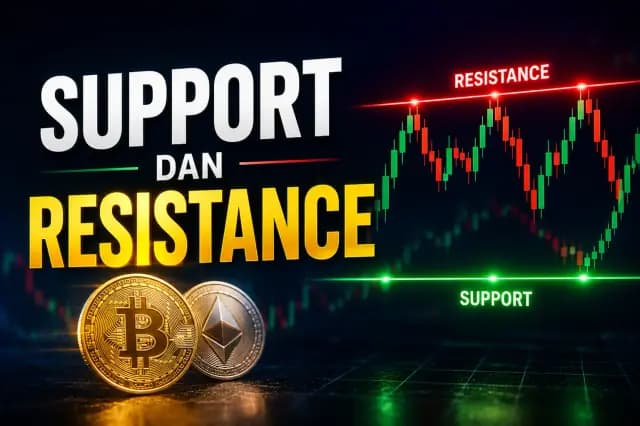
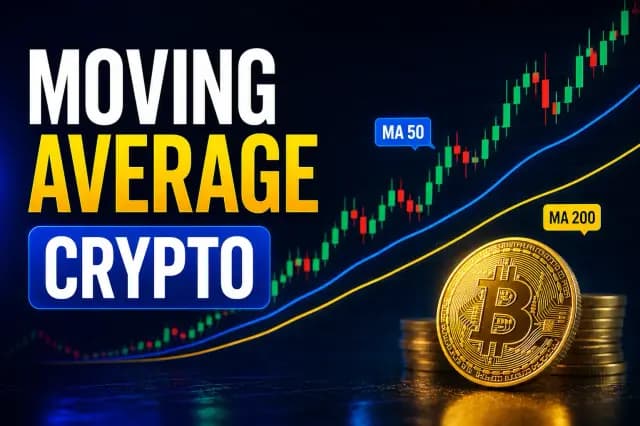
- Combination with technical indicators, like support/resistance or moving average.
On a DEX (Decentralized Exchange) such as Uniswap v3, the limit order concept is implemented through liquidity range, meaning users set aside liquidity in a certain price range. This has a similar function with an automatic limit order.
While on a CEX (Centralized Exchange), limit order remains a main feature, and is most commonly used by experienced traders.
Common Mistakes in Using Limit Order
- Placing the order too far from the market price. There is a possibility the order may never be executed.
- Not setting automatic cancellation (GTC/IOC). Some exchanges have an order duration. If you forget about your limit order, it might be activated when the market conditions have changed.
- Ignoring transaction fees. Some exchanges apply different fees for makers (limir oder) and takers (market order).
- Overtrading. Placing orders too often can drain funds because small fees will accumulate.
Conclusion: Limit Order As a Key to Discipline and Smart Strategies
Limit order is not just a technical feature, but a risk management and pricing strategy tool. By understanding how it works, traders can avoid impulsive decisions, maintain capital efficiency, and practice discipline in executing long-term strategies.
In the rapidly changing world of crypto, limit order is a “peacekeeper” amid the busy market. It gives you full control over when to enter and exit the market, as well as at what price you should do so.
FAQ (Frequently Asked Questions)
1. What is the difference between limit order and stop-limit order?
Limit order targets a specific price, while stop-limit is activated after the price reaches the trigger point (stop).
2. Can limit order fail to execute?
Yes. If the market price never reaches the target price, order will not be executed.
3. Does limit order have a fee?
The fee is typically cheaper than market order because it serves as a “maker” in the market.
4. Is limit order recommended for beginners?
Yes. Limit order helps beginners understand pricing mechanisms and avoid impulsive buying.
5. What is the best way to use limit order in the crypto market?
Use it for entry around the support area or for selling around the resistance area. Make sure your technical analysis supports your order.