- 23.6%
- 38.2%
- 50% (not a pure Fibonacci ratio, but commonly used)
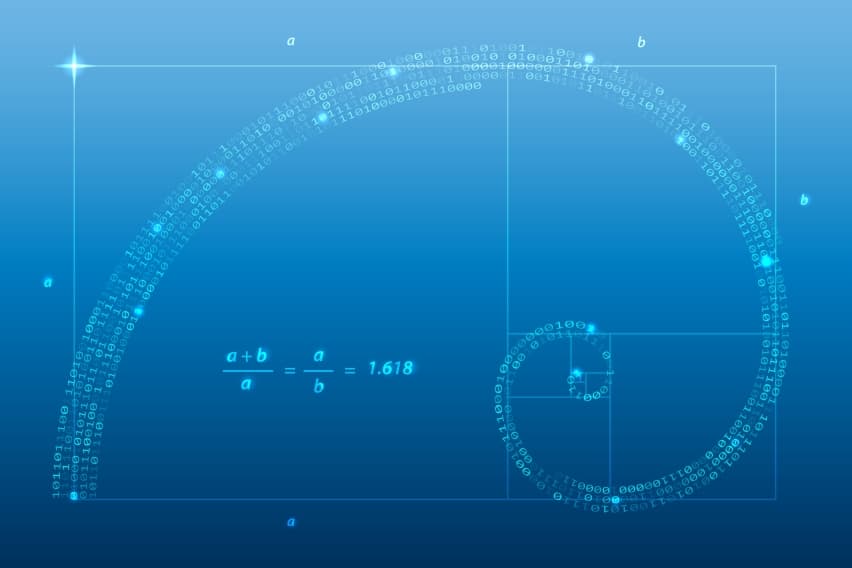
- 61.8% (Golden Ratio)
- 78.6%
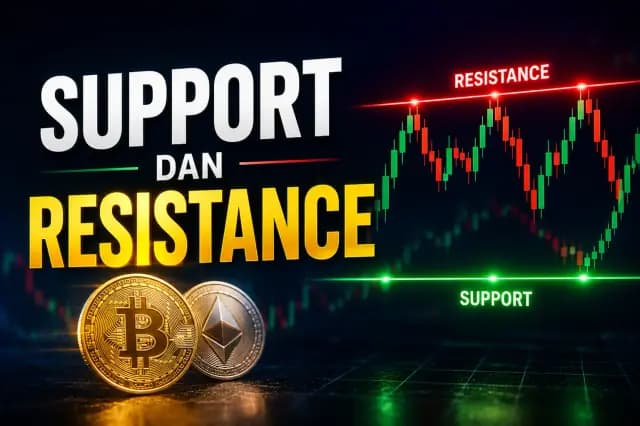
Traders use these ratios to identify potential support and resistance areas, where prices can halt or reverse directions.
Why Fibonacci Ratios Are Important in Price Analysis
Fibonacci ratios are not mystical predictions. They work because they reflect the psyche of the collective market. Traders and algorithms use the same ratios to determine entry and exit points.
For example, when Bitcoin experiences a significant increase, traders tend to wait for the price to correct itself around the 38.2% or 61.8% mark before re-entering. Because this expectation is shared by many market participants, prices often react in these areas, creating a self-fulfilling prophecy.
The 61.8% mark (Golden Ratio) is the most glamorized because it often marks a strong reversal area during major trends.
On trading platforms like TradingView or Binance Chart, Fibonacci takes a few main forms:
Fibonacci Retracement
Used to measure potential areas where prices correct themselves in an ongoing trend. This is ideally used to determine the best time to buy the dip.
Fibonacci Extension
A tool to project a targeted price after a trend breakout or continuation. This is suitable to determine take-profit areas.
Fibonacci Fan, Arc, and Time Zones
Versi lanjutan yang menggabungkan dimensi waktu dan sudut tren. Biasanya digunakan oleh trader profesional untuk memprediksi pergerakan kompleks.
An advanced version that combines the dimension of time and direction of trends. This is often used by professional traders to predict complex trend shifts.
The Difference Between Fibonacci Retracement and Fibonacci Extension
Although both use the Fibonacci ratio, Fibonacci Retracement and Fibonacci Extension have different functions and applications in technical analysis. Here are the differences between them.
Fibonacci Retracement
Used to measure potential price corrections in the middle of an ongoing trend. Traders usually connect two main price points (the start and end points of the trend) to find temporary support and resistance areas. Frequently used ratios include: 23.6%, 38.2%, 50%, 61.8%, and 78.6%.
Fibonacci Extension
Used to predict how much longer a trend will continue after correcting itself. Traders connect three price points (start, end, and retracement points) to determine a potential target price or the take-profit area. Frequently used ratios include: 61.8%, 100%, 161.8%, 200%, dan 261.8%.
Conclusion:
Fibonacci Retracement helps traders predict by how much prices can be corrected, while Fibonacci Extension predicts how much longer a trend can continue after a correction.
How to Use the Fibonacci Retracement in Crypto Trading
Here is a practical guide to the Fibonacci Retracement:
Determine the direction of a trend.
During an upward trend, draw a Fibonacci line from the swing low point (bottom price) to the swing high point (peak price).
Conversely, during a downward trend, draw a line from the swing high point to swing low point.
Pay attention to the retracement level.
Pay attention to areas 38.2%, 50%, and 61.8%. These are usually where prices react most strongly.
Use additional tools for confirmation.
Fibonacci should not be used on its own. Combine it with other indicators like RSI (to measure overbought/oversold), volume, or the candlestick pattern.
Example:
If BTC rises from $25.000 to $35.000, traders can draw a Fibonacci line from low to high. If the price is corrected to $30.000 range (about 50% retracement) and volume increases, this is often considered a strong entry signal.
Trading Strategies with Fibonacci
Fibonacci can be applied to many trading styles, such as scalping, day trading, and even swing trading. Below are some popular strategies.
Buy the Dip at the 61.8% Level
Traders wait for the price to fall to the main retracement area, then enter when a confirmation signal appears, like a bullish engulfing candlestick.
Use Fibonacci Extension for Profit Targets
After the entry, traders can determine a selling target on extension levels like 1.272 or 1.618, areas where price movements often slow down after a sharp increase.
Combination of Fibonacci + Trendline
Ketika level retracement berimpit dengan garis tren utama, area itu menjadi support/resistance yang sangat kuat.
When the retracement level coincides with the main trend line, the area between them becomes a strong support/resistance area.
Multi-Timeframe Confirmation
Use Fibonacci on larger timeframes (1D) to identify the main direction of a trend, then on smaller timeframes (1H) to find more precise entry points.
Common Mistakes in Using Fibonacci
Many novice traders fail to use Fibonacci effectively because:
- They draw lines from insignificant high/low points.
- They think Fibonacci levels are foolproof predictions.
- They disregard the high volatility of the crypto market.
- They ignore other confirmation methods like volume or price action.
Remember, Fibonacci is a tool, not the final decision-maker. It works best when used together with solid technical analysis.
Pros and Cons of Fibonacci
Pros:
- Easy to understand and can be used for all asset types.
- Provides a visual guide for entry and exit points.
- Flexible, usable for all timeframes.
Cons:
- Subjective. Each trader can draw a Fibonacci line from different points.
- Does not provide a time signal, such as when prices will move.
- Less effective when the market does not have a clear trend (sideways market).
Case Study: Fibonacci in BTC/USDT
Take Bitcoin during the 2021 bull run phase as an example. After peaking at around $64,000, the price corrected itself to the $47,000 area, almost exactly at the 61.8% retracement level. From that point, BTC rose back to the $69,000 level.
Corrections like this often occur because many traders and investors wait in the Fibonacci area to make purchases. This reinforces the belief that Fibonacci works not because of magic, but because of the collective expectations of the market.
Conclusion: Fibonacci, An Art and Science in Trading
Fibonacci is more than just numbers. It is about understanding the market’s patterns and psyche. In a fluctuating crypto economy, Fibonacci helps traders tread the line between euphoria and fear.
However, just like all technical analysis tools, Fibonacci is most effective when used in conjunction with other indicators and strict risk management. With consistent practice, traders can shape Fibonacci into a powerful analytical weapon to correctly read where the crypto market is headed.
FAQ About Fibonacci in Crypto
1. What is the main function of Fibonacci Retracement?
To determine potential areas where a price will correct itself before resuming the main trend.
2. Is Fibonacci only applicable to the crypto market?
No. Fibonacci is used in all types of market, like stocks, forex, commodities, and, of course, crypto.
3. Which Fibonacci levels are the most accurate?
The 38.2%, 50%, and 61.8% levels are the most common areas where prices react.
4. Is Fibonacci suitable for beginners?
Yes. With a little practice, a novice trader can easily understand its concepts.
5. How to combine Fibonacci with other indicators?
Use it with RSI, MACD, or trendline for a more valid confirmation signal.