How Scalping Works in Crypto Trading
The main idea of scalping is frequency and speed. Traders make many small transactions with quick exits, relying on technical analysis, volume, and order books to find opportunities.
Common steps in scalping:
- Analyzing the price chart at a very short time frame, typically 1 minute (M1), 3 minutes (M3), or 5 minutes (M5).
- Reading market momentum using indicators like RSI, MACD, or Bollinger Bands.
- Entry position on a good momentum (such as RSI <30 for buying, >70 for selling).
- Exit position immediately after achieving a small target, typically 0.5–2% from capital.
- Repeat the process multiple times in one trading session.
Scalping is highly dependent on high liquidity and low spreads, as small price differences may cut profit margins. This is why professional traders tend to choose large exchanges like Binance, Bybit, or OKX.
Commonly Used Crypto Scalping Strategies
In practice, there are many approaches to scalping, depending on the trader’s style and tool of choice.
Market Making Strategy
Traders place buy and sell orders simultaneously on both sides of the order book (bid and ask). They seek to profit from the price difference (spread). This strategy is effective in high-volume markets.
Range Trading
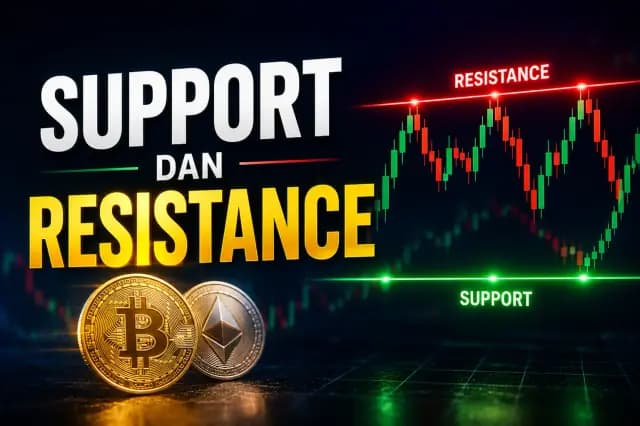
Scalpers identify support and resistance areas, then buy at support and sell at resistance. Since crypto movements often oscillate in small ranges, this technique is common in sideways markets.
Arbitrage Scalping
This strategy takes advantage of price differences between exchanges. For example, if BTC is $67,000 on Binance and $67,050 on KuCoin, traders buy on Binance and sell on KuCoin for quick profits.
Indicator-Based Scalping
This strategy relies on signals from technical indicators such as:
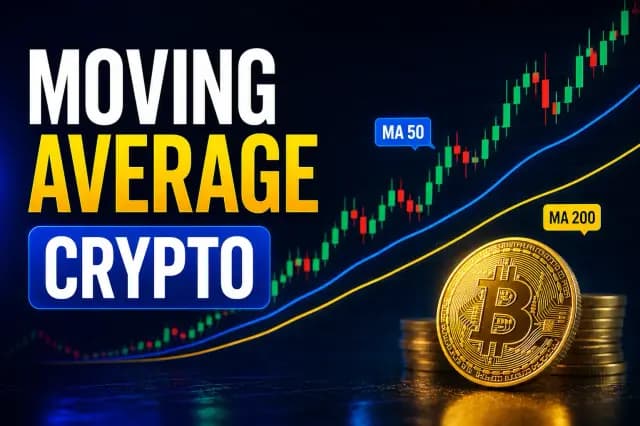
- Moving Average (EMA 9 & 21): entry signal when the short EMA line cross the long EMA line.
- Bollinger Bands: entry when price bounces from the low band and exit when it is nearing the high band.
- MACD Divergence: detects changes in short-term momentum direction.
Bot Scalping
Professional traders often use trading bots for automated execution. Bots like 3Commas, Pionex, or Bitsgap can execute hundreds of orders per day at high speed, which is difficult to do manually.
Pros of Crypto Scalping
Why do many traders use this strategy, even though it sounds exhausting? Scalping offers several strategic advantages:
- Quick profits: No need to wait for long-term trends
- Minimizes major risks: Positions change quickly, so the price is not affected by large shifts that occur in a day.
- Unlimited opportunities: The crypto market is active 24/7, so the opportunity for scalping is always present.
- Thrives in volatile markets: The more the price fluctuates, the bigger the potential for short-term profit.
Cons and Risks of Crypto Scalping
However, just like other strategies, scalping possesses a high risk.
- Accumulating transaction costs: Fees per trade can cut into margins if done too often.
- Psychological pressure: Making quick decisions for hours is mentally exhausting.
- Mistake in execution: A 1-second delay can turn profit into loss.
- Not for beginners: This strategy requires accuracy in reading price charts and strict risk management.
- Overtrading: When chasing quick profits, many scalpers end up exhausted and losing discipline.
For best results, scalpers must choose quick, accurate, and trustworthy tools.
- Exchange: Binance, Bybit, Bitget, and OKX are known for their high liquidity and low spread.
- Analysis tools: TradingView for quick charting and automatic alerts.
- Bot trading: 3Commas, Pionex, Bitsgap for automated executions.
- Best pair: BTC/USDT, ETH/USDT, and other liquid coins, such as BNB, SOL, or XRP.
Effective Tips for Crypto Scalping
- Use leverage wisely. High leverage increases the risk of margin calls.
- Use a demo account or do paper trading first. Test strategies before using real funds.
- Limit your number of transactions. Focus on quality, not quantity.
- Manage risks strictly. Enforce an automatic stop-loss in every entry.
- Avoid feeling emotional. Scalping is a game of discipline, not intuition.
Real example: A trader makes 50 transactions with a target of 0.8% per trade and 70% accuracy. If the capital is $1,000, the daily result can be ±$28. This sounds small, but if it is done consistently for 20 days, that's $560 a month.
Scalping in the Local DRX Token Ecosystem
Scalping can also be done with community tokens such as DRX Token, as long as there is a sufficient transaction volume and healthy volatility. Traders need to pay attention to:
- DRX’s market liquidity on DEXs/CEXs.
- Community activities that affect daily volume.
- Event schedules, staking, or new listings that may trigger price changes.
Scalping strategies can help community members understand the price dynamics of their tokens and maintain short-term liquidity.
Conclusion: Scalping is A Quick Strategy That Demands Precision
Crypto scalping is not for everyone. It demands precision, speed, and nerves of steel. However, for traders who can maintain discipline and risk management, scalping can be an effective tool to consistently take advantage of the crypto market’s volatility.
Like all strategies, success comes from practice, technical knowledge, and managing emotions. Scalping can be a shortcut for profit, or a trap for impulsive buyers without a strategy.
FAQ: Common Questions About Crypto Scalping
1. What is the difference between scalping and day trading?
Scalping focuses on transactions within minutes, while day trading maintains a position for a few hours in a day.
2. What is the minimum capital to start scalping?
There is no fixed rule, but ideally, it should be a minimum of $100-$500 so that transaction fees don’t cut into profit margins.
3. Is it possible to scalp with bots?
Yes, many traders use bots to automate entry-exit positions, making the process quicker and more efficient.
4. Is scalping beginner-friendly?
Not recommended for beginners without technical experience and strong risk management.
5. Which pairs are most suitable for scalping?
Pairs with high volume and low spread, such as BTC/USDT, ETH/USDT, and BNB/USDT.