To understand price shifts and volatility, you need to grasp basic concepts such as market cap. Read a full explanation in What is Crypto Market Cap: Important Function & How to Calculate It
Why is the Crypto Market so Volatile?
If you’re only getting into cryptocurrency, it may be hard to comprehend why prices can shift drastically. Several factors explain why the digital asset market is significantly more volatile than stocks or gold.
1. Relatively Lower Liquidity
Even though cryptocurrency appears to have high trading volume, this market is still smaller than the global stock market.
This means that a large transaction from institutional investors or whales can have a significant impact on prices.
2. Speculation and FOMO
Most participants of the cryptocurrency market are retail traders who react to emotions, especially fear of missing out (FOMO) when prices skyrocket and panic selling when they plummet.
This emotional cycle enhances the already extreme fluctuations.
3. Lack of Global Regulation
Unlike stocks, which are strictly regulated, cryptocurrency is still in a grey regulatory area.
Hence, rumors or new regulations from leading countries can trigger extreme reactions in the global market.
4. Media and Public Sentiment
Tweets from public figures, like Elon Musk, or negative news, such as an exchange’s bankruptcy, can trigger massive jumps in volatility within a matter of hours.
5. Macroeconomic Conditions
High inflation, Federal rate cuts, or geopolitical tension can drive investors toward or away from cryptocurrency.
Real examples:
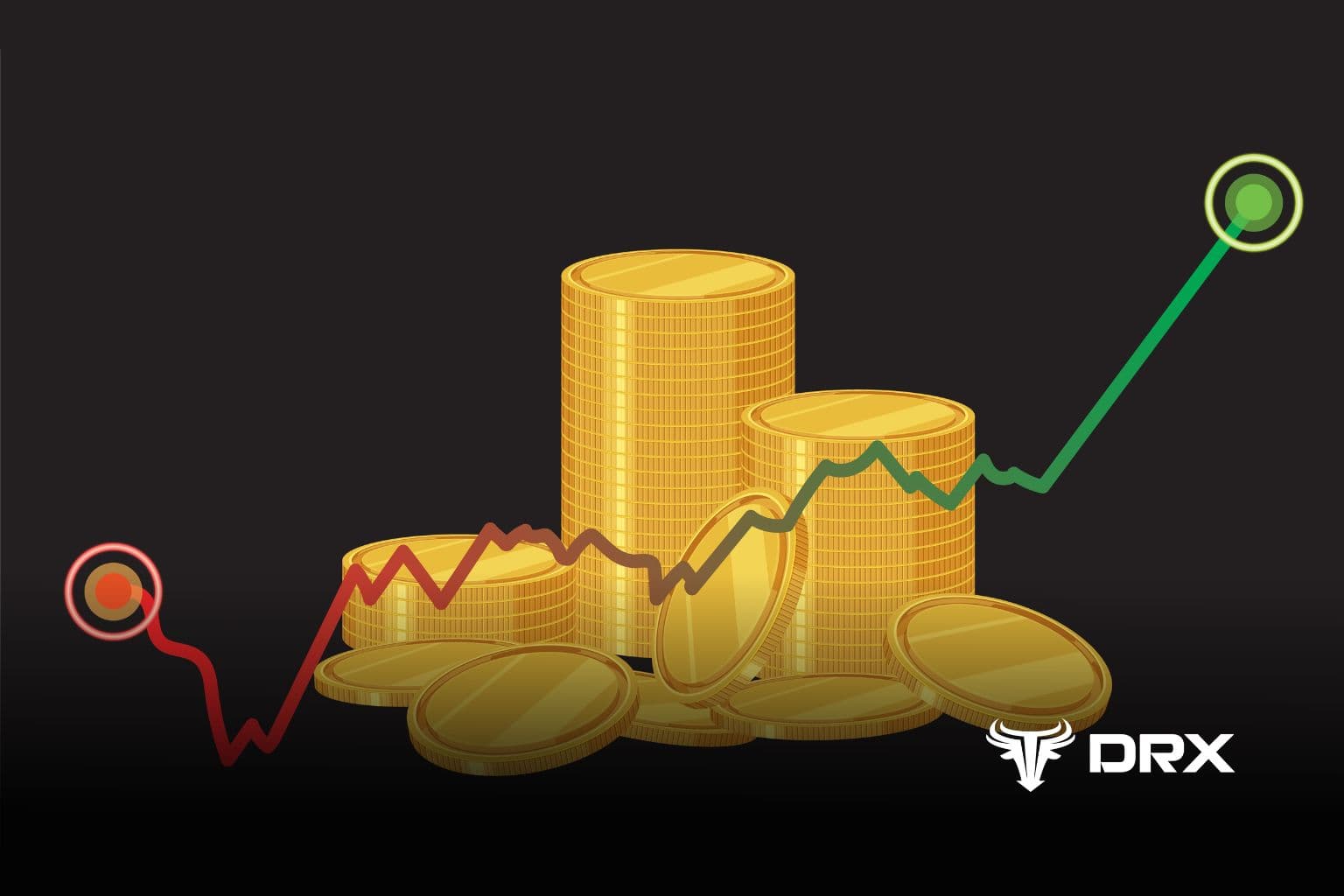
- In 2021, Bitcoin rose from $30.000 to $69.000 due to institutional euphoria.
- In 2022, the market collapsed to $15.000 due to the Terra-LUNA crisis and FTX’s bankruptcy.
- All of this happened within 12 months.
This paints a real image of how volatility works in cryptocurrency. When volatility rises dramatically, the market often enters a long period of slump called the bear market. Read more about it in What is Bear Market: Characteristics, Causes, and Strategies.
Types of Volatility in Cryptocurrency Analysis
To get a deeper understanding of the market, crypto analysts define volatility into three categories:
1. Historical Volatility (HV)
Measures price fluctuations based on past data. For example, if Bitcoin’s price fluctuates 10-15% in the last 30 days, then it has a high HV.
2. Implied Volatility (IV)
Reflects market expectations on future price fluctuations. This is often analyzed based on derivative contracts such as Bitcoin options. The higher the IV, the greater the uncertainty and tension in the market.
3. Realized Volatility
A comparison between the anticipated and realized volatility. This indicator is often used to assess whether a market is too optimistic or pessimistic. By understanding the types of volatility, investors can assess whether a certain price shift is a common occurrence or a sign of mass panic.
Impact of Volatility on Cryptocurrency Investors
Volatility is more than just statistics. It has a real impact on investors, their psyche, and their decisions.
1. Pros of Volatility
- High Profitability: Active traders can capitalize on short-term price fluctuations to earn a profit.
- Active Market: Volatility attracts investor interest and trading volume, shaping a dynamic ecosystem.
- Indicator of Liquidity: The shifts in volatility can help identify when the market is active or sluggish.
2. Cons of Volatility
- Risk of Great Loss: Prices can drop by 20% in a day, especially to those who use leverage.
- Emotional Pressure: Extreme volatility often leads to panic selling or impulsive decisions.
- Unpredictability: Price cycles in cryptocurrency often defy traditional technical logic.
Professional investors know that volatility should not be avoided, but managed. They build strategies that adjust to risks, not fight them.
How to Measure Volatility in Cryptocurrency
Volatility can be measured with several tools and technical metrics. Some instruments commonly used by market analysts include:
1. Standard Deviation
Measures how far prices deviate from the average. The greater the deviation, the higher the volatility.
2. Average True Range (ATR)
Used in technical analysis to see the average range of price shifts over a certain period, usually 14 days.
3. Bitcoin Volatility Index (BVIN)
A special index that assesses the magnitude of Bitcoin price shifts over the last 30 days. BVIN is often used as a reference to predict the general direction of market trends.
4. Implied Volatility Chart (IV Chart)
Displays expectations of future volatility based on options contracts on derivative exchanges, such as Deribit. Experienced analysts don’t rely on a single indicator but use a combination of multiple indicators to gain a comprehensive understanding of market sentiment.
Strategies to Handle Volatility in Cryptocurrency
Volatility cannot be eliminated, but it can be managed with smart strategies. Here are guidelines used by many professional investors:
1. Use Dollar Cost Averaging (DCA)
Instead of buying all at once, investors purchase assets gradually over a period of time. This strategy reduces the risk of “bad timing” and helps stabilize the average purchase price.
2. Portfolio Diversification
Distribute risk of loss across multiple assets: Bitcoin, Ethereum, stablecoins, and other fundamentally strong projects. Don't invest all your capital into one coin.
3. Use Stop-Loss
Always set a maximum loss limit per position. This prevents you from losing all your capital due to extreme movements.
4. Focus on Fundamentally Strong Assets
Short-term volatility will not disturb projects with solid ecosystems, strong communities, and real use cases.
5. Education and Patience
Experienced investors understand that volatility is part of the game. They use quiet times to learn technical, fundamental, and macroeconomic analysis.
Volatility: Risk or Opportunity?
Volatility is often misinterpreted as a sign of danger, when in fact, it is an extraordinary opportunity, so long as you know how to take advantage of it.
- For traders, volatility is the “fuel” for short-term profits.
- For long-term investors, it is an opportunity to buy quality assets at a discount.
High volatility reminds us that the crypto market is still young — in a phase of exploration, innovation, and adjustment to global dynamics. As legendary investor Paul Tudor Jones often says:
“Volatility is not a risk; it’s an opportunity for those who know what they’re doing.”
Conclusion: Volatility is the Heart of the Crypto Market
Volatility is not the market’s enemy, but rather the pulse that keeps it alive. It reflects uncertainty, emotions, and the ever-evolving dynamics of new technology.
Understanding volatility means understanding how the market reacts to the real world—from monetary policy to Twitter news.
For investors, the ability to manage volatility is a key skill for surviving and growing in the long term.
So, instead of fearing it, learn about it. In the crypto world, knowledge is the most valuable asset that never loses its value.
Want a broad knowledge of important terms in the world of digital assets? Explore a complete guide in DRX Token's Dictionary: 70+ Crypto Terms & Definitions for Beginners.
FAQ About Volatility
1. What is volatility in cryptocurrency?
Volatility is a measure of how quickly and significantly the price of a crypto asset changes over a certain period of time.
2. Why are crypto prices so volatile?
Due to factors like low liquidity, high speculation, media sentiment, and the absence of clear global regulations.
3. Is volatility a bad thing?
No. High volatility presents opportunities for traders and momentum for long-term investors.
4. How to calculate the volatility of a crypto asset?
Use indicators like standard deviation, ATR, or the Bitcoin Volatility Index (BVIN).
5. How to handle volatility as a beginner?
Use the DCA strategy, diversify your assets, and don't react to market emotions.
Want A Better Understanding of Cryptocurrency?
Learn other terms such as bear market, market cap, and DYOR from the educational articles in DRX Token’s Dictionary. Build understanding, don't just follow trends.