To start mining, you need to understand its technical components, choose the right hardware, manage costs, and select a mining model that aligns with your goals—whether for research, profit, or contributing to the network.
Benefits of Crypto Mining for Token Research
- Understanding Network Architecture – Mining provides direct insight into how nodes interact and verify blocks.
- Validating PoW Consensus Security – Researchers can see how hash rate affects network security.
- Accurate Tokenomics Analysis – Block rewards, difficulty levels, and token distribution can be analyzed based on real-time data.
- Network Design Experimentation (Testnet Mining) – Researchers can test tokenomics designs, reward parameters, and difficulty adjustment mechanisms in test networks.
Elaboration
Mining helps researchers understand how a token's value is formed from a technical and economic perspective. By mining, researchers gain a deep understanding of token production costs, hash power dynamics, and how economic shifts (halving, difficulty adjustment) affect network sustainability.
This is essential for assessing the viability of new tokens, evaluating whitepapers, or deciding whether a particular project has a strong network foundation or mere marketing hype.
Experience and Case Study: “I Tried Crypto Mining for 30 Days and Found This Insight”
For 30 days, I mined minor PoW assets (not Bitcoin) using a GPU for token research. From this experiment, I discovered several unique insights.
- Network hash rates fluctuate sharply, significantly affecting daily reward potential.
- Electricity bills are the biggest factor, accounting for 60–70% of total operational costs.
- Chasing profits alone is not an ideal strategy. Mining provides valuable technical data to understand network stability.
- Mining pools have different payout accuracies, which affects reward transparency.
Thus, I believe crypto mining is not just a reward-seeking activity, but the best way to understand blockchain security from a practical standpoint.
How to Start Crypto Mining (The Ultimate Step-by-Step Guide)
Step 1: Determine an Asset to Mine
Some common options:
- Bitcoin (BTC) → ASIC mining
- Ethereum Classic (ETC) → GPU mining
- Kaspa, Flux, Ravencoin → GPU mining
- Monero (XMR) → CPU mining
- Testnet Mining → for protocol research
Choose an asset that aligns with your mining goals: profit, token research, or technical experiments.
Step 2: Prepare Mining Hardware
- Mining CPU: For basic research on specific tokens or testnet.
- Mining GPU: RTX 3060–4090 / AMD RX series are flexible and support multiple tokens.
- ASIC Miner: Best performance, used mainly for Bitcoin & some other PoW tokens.
- Cloud Mining: Does not require hardware, but beware of scam risks.
Step 3: Install Mining Software
Some popular options
- CGMiner
- BMiner
- NiceHash Miner
- HiveOS
- lolMiner / TeamRedMiner / PhoenixMiner
Ensure your software supports the PoW algorithm used by your token.
Step 4: Select a Mining Pool
Large networks are difficult for solo miners. Select a reputable pool, such as:
- F2Pool
- Ethermine
- ViaBTC
- 2Miners
- Binance Pool
Note these factors:
✔ pool fee
✔ minimum payout
✔ reputation
✔ server stability
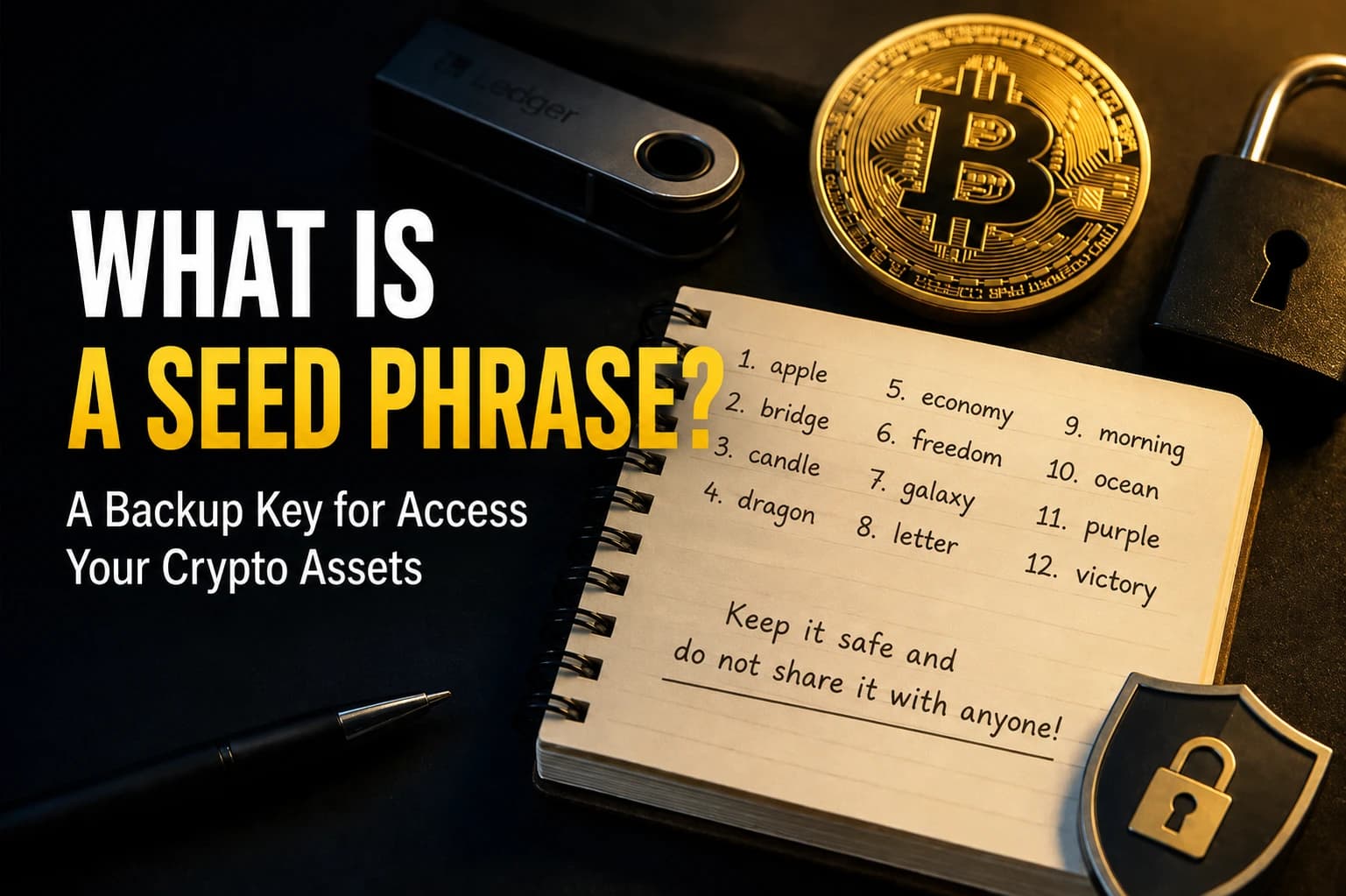
Step 5: Prepare a Wallet
You need a wallet to receive mining rewards.
We recommend:
- Hardware Wallet (Ledger / Trezor)
- Software Wallet (Exodus, Trust Wallet)
- Official Chain Wallet
Ensure your wallet supports the assets you mine.
Step 6: Start Mining & Monitoring
Monitor:
- Hash rate
- Hardware temperature
- Energy consumption
- Daily earnings
- Difficulty
Use dashboards such as HiveOS, RaveOS, Minerstat, or a built-in dashboard pool..
Crypto Mining Risks and Solutions
1. High Electricity Costs
Solution: Use efficient hardware (ASIC modern / GPU undervolt), mine from an inexpensive location, and monitor energy consumption.
2. Token Volatility
Solution: Focus on tokens with strong fundamentals, or mine during a sluggish market (low difficulty).
3. Hardware Damage
Solution: install a cooling system, change the thermal paste periodically, and maintain hardware temperature at around 70–75°C.
4. Cloud Mining Scams
Solution: Avoid platforms without global reputation, use official mining pools or physical hardware.
5. Reliance on Difficulty
Solution: Diversify to multiple PoW tokens in their early stage to reduce risks of large fluctuations.
Tips to Optimize Crypto Mining
- Use energy-efficient hardware (new generation ASIC or GPU undervolt).
- Choose tokens with low difficulty to maximize results.
- Use a stable cooling system, especially when mining in warm areas.
- Optimize mining algorithms that align with your GPU/ASIC capabilities.
- Install automatic monitoring to turn off rigs when the temperature has reached a certain point.
- Stay updated on PoW projects to be informed of forks, halving, or changes in network parameters.
- If you lack capital, start with testnet mining for technical understanding.
Frequently Asked Questions (FAQ)
1. Is crypto mining safe?
Yes, mining is safe as long as you use official software, a trusted pool, and a device with a good cooling system.
2. What is the difference between mining and staking?
Mining uses hardware (Proof of Work), while staking only locks tokens (Proof of Stake).
3. How long does it take to see mining results?
It depends on the asset and pool. On average, it takes 24–72 hours before you receive your first payout.
4. Who is fit for crypto mining?
Token researchers, blockchain analysts, developers, and users who want a deeper understanding of the PoW mechanism.
Conclusion
Crypto mining is a pillar of blockchain security that serves as the foundation of modern PoW systems. With benefits such as enhancing network security, validating transactions, understanding tokenomics, and providing rewards, mining is an important activity for token researchers and blockchain practitioners.
For optimal results, use energy-efficient devices, select a trusted pool, and continuously monitor changes in network difficulty.