This process utilizes the hashing algorithm, such as SHA-256 on the Bitcoin network, to determine a particular hash value that fulfills system requirements.
The first miner to successfully find the correct hash will:
- Spread the block to the whole network.
- Receive a block reward (new coins).
- Receive a transaction fee for every transaction made in that block.
This process makes the blockchain secure and difficult to manipulate, because to change even one transaction, someone would have to recalculate the entire hash of all subsequent blocks. This task is computationally nearly impossible.
Types of Mining in Crypto
Solo Mining
The most traditional method, where an individual mines by themselves using their own equipment.
Pros:
- No need to share rewards.
Cons:
- Few chances of finding new blocks, except by utilizing extremely powerful equipment.
Pool Mining
A collaboration between miners to combine computational power (hash rate). If a pool successfully locates a block, rewards are distributed based on each member’s contribution.
Pros:
- More consistent reward streams.
Cons:
- Must pay fees to the pool operator.
Cloud Mining
A method in which users rent computing power from mining service providers. This method is suitable for those who don’t want to buy expensive equipment or deal with high electricity bills.
Pros:
- Practical, no physical equipment required.
Cons:
- High risk of scams, or the service is not transparent.
Devices and Technology in Mining
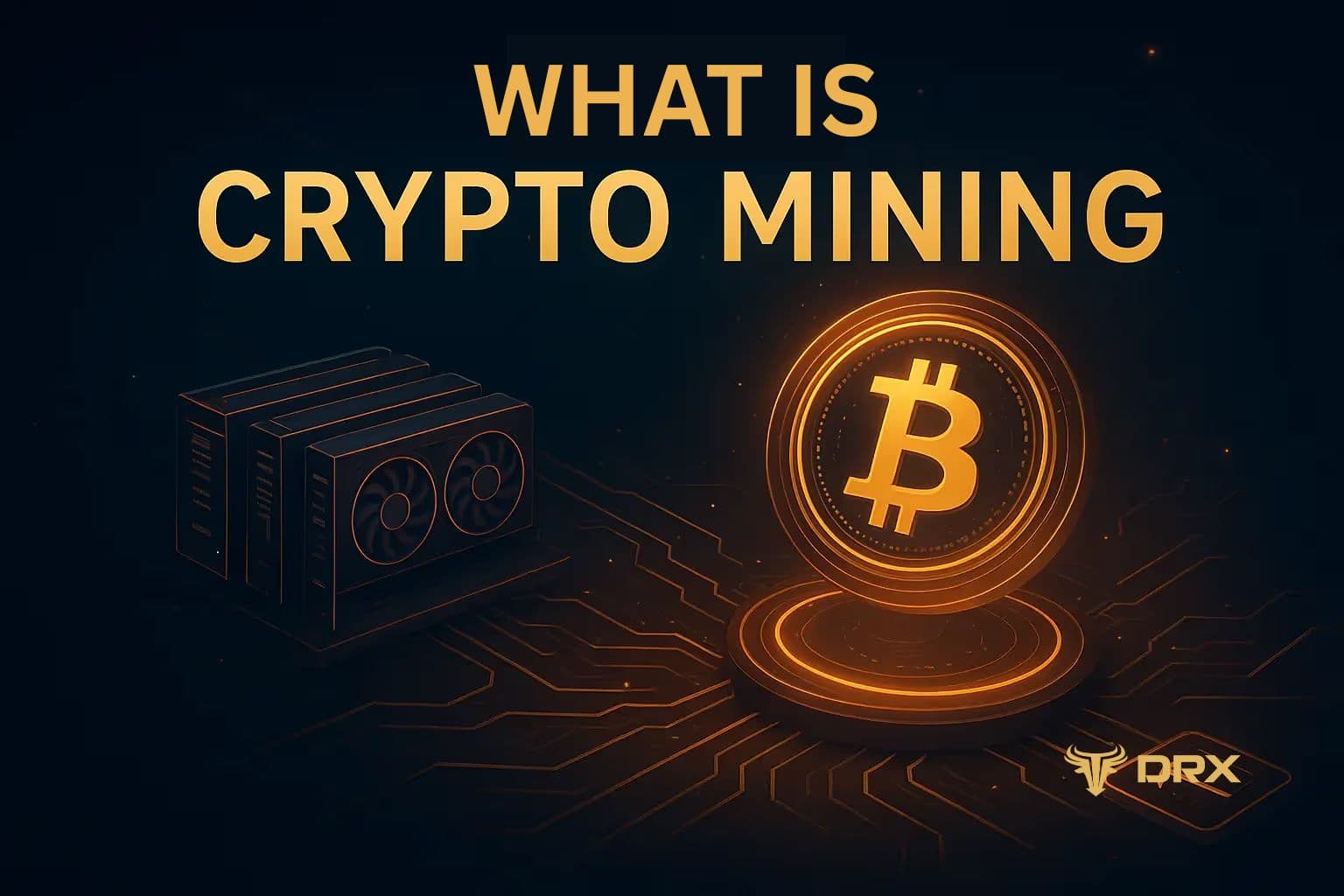
Crypto mining requires powerful hardware. Three commonly used types include:
CPU Mining
The oldest method of mining, which uses a regular computer’s processor. This was efficient during Bitcoin’s early days, but is no longer relevant due to a drastic increase in difficulty.
GPU Mining
Uses a graphics processing unit (GPU), which can perform thousands of calculations per second. This makes GPU mining a popular choice in mining coins such as Ethereum Classic, Ravencoin, or Ergo.
ASIC Mining (Application-Specific Integrated Circuit)
A device designed specifically for one type of algorithm, for example, SHA-256 for Bitcoin.
ASIC is much faster and more efficient, but also more expensive and can easily become obsolete when new models are introduced.
Aside from hardware, these factors also determine the overall profitability of mining:
- Electricity consumption
- Cooling system
- Location with low energy costs
Mining Rewards and Incentives
A miner’s main motivation is the block reward, which is new coins generated each time a block is successfully mined.
For example, on the Bitcoin network, each new block provides a reward of 3.125 BTC (as of 2024, after halving). This number will continue to decrease every four years until the total supply of Bitcoin reaches its maximum limit of 21 million.
In addition to block rewards, miners also receive transaction fees from each transaction in the block. Total income = Block Reward + Transaction Fee.
If more transactions occur and the network is more congested, miners will receive higher transaction fees.
Challenges and issues in Mining
a. Energy Consumption
PoW mining is known to be energy-intensive. Some studies show that the Bitcoin network consumes as much electricity as a small country like Austria.
This issue has sparked a major debate between energy efficiency and decentralized security.
b. Hash Power Centralization
Even though a blockchain is decentralized, in reality, most of the global computing power is centralized in specific regions like China (before it was banned), Kazakhstan, and the US.
When one entity controls >50% hash rate, a 51% attack can potentially occur.
c. Regulation
Some countries have banned mining because it is considered energy-intensive or poses a risk to electricity stability. However, others welcome mining as an investment opportunity. For example, El Salvador and several Latin American countries have begun to utilize geothermal energy for green mining.
Transition to Proof of Stake and the Future of Mining
Many new blockchains, including Ethereum after the merge, have transitioned from Proof of Work (PoW) to Proof of Stake (PoS).
PoS no longer requires heavy equipment to mine. Validation is done by validators who stake a number of tokens.
Despite that, mining will not completely disappear.
- Bitcoin remains upholding its PoW system.
- Several new projects (like Kaspa, Ergo, or Monero) still utilize GPU mining as the main security mechanism.
Moving forward, innovations such as green mining and AI-assisted optimization can make mining more eco-friendly and efficient.
Conclusion: Mining, The Foundation of A Decentralized Blockchain
As the heart of the blockchain ecosystem, mining ensures transactions are valid, networks are secure, and decentralization is maintained.
Despite challenges in energy consumption and regulations, the role of mining as a mechanism of digital trust remains irreplaceable.
In the long term, the evolution of mining will go hand-in-hand with technological advancements and blockchain algorithms. From CPU to GPU and now ASIC, and moving forward to green mining, they are all proof of one thing: innovation in the crypto world will never cease.
Mining is not just about “earning coins”, but about maintaining the fundamental principles of the crypto world: transparency, security, and decentralization.