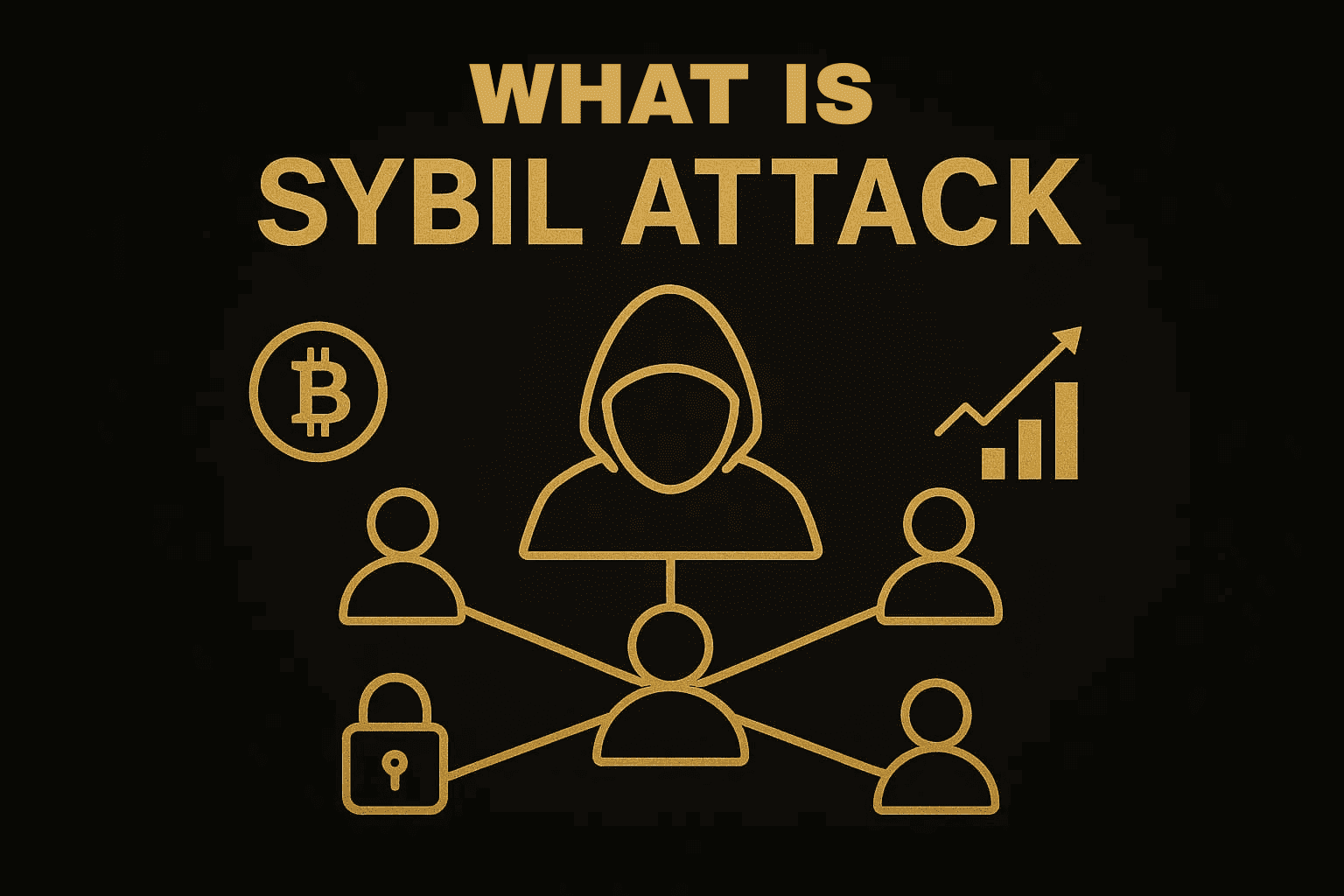
In the context of blockchain, a Sybil Attack is an attempt to deceive a system that assumes each node is independent and trustworthy. By creating multiple accounts or duplicate nodes, an attacker can influence network decisions, hinder transactions, or even manipulate block validation data.
How A Sybil Attack Works
To understand how a Sybil Attack works, imagine a decentralized voting network where each node has one vote. If an attacker manages to create 100 fake nodes, they can control the majority of votes, even though, in actuality, only one entity controls them.
Common Steps in A Sybil Attack:
- The attacker creates multiple digital identities (wallets, nodes, or new accounts).
- These fake identities are used to interact with the network simultaneously.
- Systems that lack identity validation mechanisms will treat all nodes as independent entities.
- The attacker then exploits this “fake mass” to control voting results, block transactions, or deceive consensus algorithms.
For example, in a Proof of Stake (PoS) network, an attacker can split their stake into multiple small wallets to pose as many independent validators, when in fact they are controlled by a single party.
The Impact of Sybil Attacks on the Crypto World
Sybil Attacks are not just technical disruptions; they can threaten the very foundation of blockchain itself. Here are some of the most significant impacts:
- Consensus Manipulation: Attackers can disrupt the validator voting system in PoS or DPoS consensus.
- Transaction Spam and On-chain DDoS: Thousands of fake nodes can flood the network with junk transactions, slowing down new blocks.
- DAO Governance Fraud: Fake identities can be used to win votes in governance projects, manipulating community decisions.
- Data Distortion in DeFi: Fake bots or wallets can manipulate liquidity volume or TVL (Total Value Locked) statistics, creating the illusion of massive adoption.
In extreme cases, Sybil Attacks can undermine investor confidence, disrupt market mechanisms, and cause users to lose funds.
Types of Sybil Attacks
Sybil Attacks have several variations depending on their strategy and purpose. Here are the three most common types.
Direct Sybil Attack
The attacker interacts directly with the original node using a fake identity. For example, multiple fake wallets make transactions to a single smart contract to overload the network.
Indirect Sybil Attack
The attacker uses an intermediary node to avoid direct detection. The fake identity is connected to the original node through another layer, making it more difficult to identify.
Hybrid Attack
A combination of direct and indirect attacks. A hybrid Sybil Attack is used to circumvent layered security systems. This type of attack often occurs in large DAOs or networks with on-chain voting systems.
How to Prevent and Counter A Sybil Attack
Countering Sybil Attacks is not easy, as blockchains are built on the freedom of anonymous participation. However, there are various technical and social mechanisms designed to reduce the risk:
Proof of Work (PoW)
Attacking a PoW-based network like Bitcoin requires extremely high computational costs. It requires a lot of energy and powerful hardware, so creating fake nodes is inefficient.
Proof of Stake (PoS)
This system requires participants to hold a stake (capital) locked in the network. The larger the stake, the greater the trust. Creating many fake identities would require significant capital, making it uneconomical.
Proof of Authority (PoA)
Validators are selected based on reputation and identity verification. This model is often used by more centralized enterprise blockchains, such as VeChain.
KYC and Decentralized Identity (DID)
Some DeFi platforms are starting to implement Know Your Customer (KYC) or Decentralized Identity (DID) so that each account has a unique identity without compromising privacy.
Reputational Systems
A mechanism for assigning trust scores based on transaction history and participation. Wallets with good reputations are more trusted in voting and validation.
The Role of Regulation and Security Standards
Regulation plays an important role in preventing identity abuse in the crypto world.
Organizations such as FATF, EU MiCA, and Bappebti (Indonesia) are enforcing stricter user verification and digital transaction standards.
Additionally, major blockchain projects are now collaborating with security audit providers to monitor on-chain activity in real-time.
The goal is not to limit anonymity, but to ensure the security and integrity of the Web3 ecosystem so that it cannot be easily manipulated by Sybil Attacks.
FAQ: Common Questions About Sybil Attacks
1. How does Sybil Attack differ from regular hacking?
Hacking attacks the system from the outside, while a Sybil Attack strikes from the inside by creating fake identities to manipulate the system.
2. Can Sybil Attack occur in every blockchain?
Yes. All decentralized systems that rely on unique identities are vulnerable to this attack, especially if they lack strong validation mechanisms.
3. How to detect a Sybil Attack?
Signs of a Sybil Attack include unusual transaction activity, a sudden increase in new nodes or wallets, and unnatural voting behavior in DAO governance.
4. Can KYC completely prevent Sybil Attacks?
Not entirely, but KYC and DID are highly effective in reducing the risk of fake identity attacks in decentralized systems.
5. What is the best course of action for individual users to protect themselves from Sybil Attacks?
Use platforms with credible security and audit systems, avoid anonymous projects without transparency, and understand the basics of consensus mechanisms before investing.
Conclusion: Building Trust in a World Without Identity
Sybil Attack shows that, even in a system without central authority, trust remains a key foundation.
Decentralization may erase the need for intermediaries, but it also creates an opening for digital identity abuse.
In order to build a sustainable blockchain ecosystem, a combination of technology, economy, and ethics is a must.
Proof of Stake, KYC, and Decentralized Identity are not just technical solutions, but small steps towards a secure and trustworthy Web3 in the future.
To learn more about different types of attacks in Web3, visit our blog and website.