
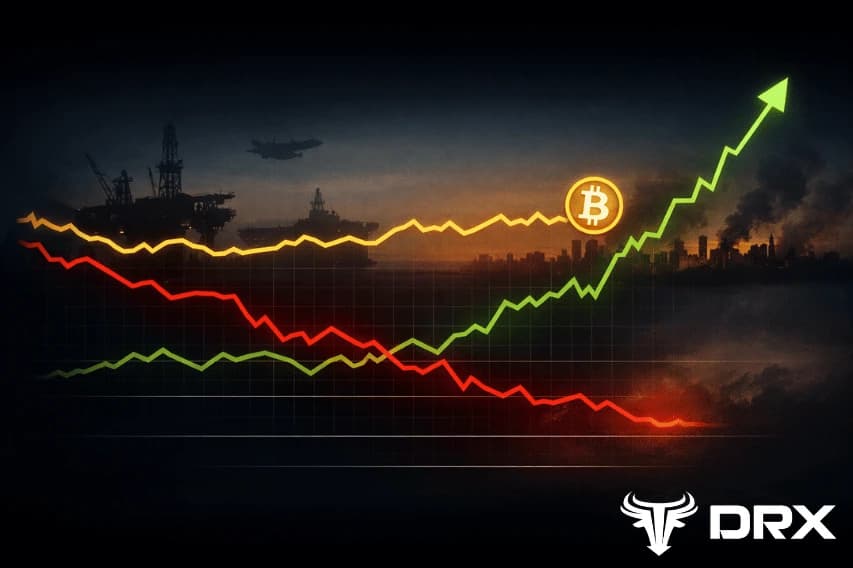
Geopolitical tensions have increased again after Iran reimposed control over the Strait of Hormuz, which triggered a sharp reaction from global markets. Brent oil prices surged more than 5% while stocks in Europe and the United States declined.
Amid the turmoil, crypto has shown a more stable response.
According to the data from CoinDesk, Bitcoin recorded a decline of around 1,6% to the level of $74,335 in the last 24 hours. Although it is currently weakening, this decline is considered small compared to the surge in the energy market and pressure on global equities. Meanwhile, Ether and Solana fell below 3% indicating that the correction is still within reasonable limits.
This different reaction has become a major highlight. Because, compared to the traditional safe haven assets, crypto seems more capable in balancing its value amid short term geopolitical turmoil.
In several previous moments, every escalation in geopolitical tension tended to trigger a deeper decline. However, in this time, the impact of the decline is increasingly limited.
This phenomenon indicated that the crypto market may have anticipated geopolitical risks.
In addition, the presence of institutional investors and the demand from spot ETF has begun to create stronger support. This reduces the extreme volatility that previously often occurred.
In further, market attention will be focused on Bitcoin’s value, which is still in the range of $74,000 to $73,000. If Bitcoin is able to hold above this level despite increasing geopolitical tensions, the narrative that crypto can function as a “geopolitical shock absorber” will become stronger.
On the other hand, if pressure continues and the price falls below that level, this resilience may be questioned again.
In this global market condition which is full of uncertainty, Bitcoin’s role is now beginning to shift. From initially being merely a speculative asset to becoming a more defensive instrument against global risks.


